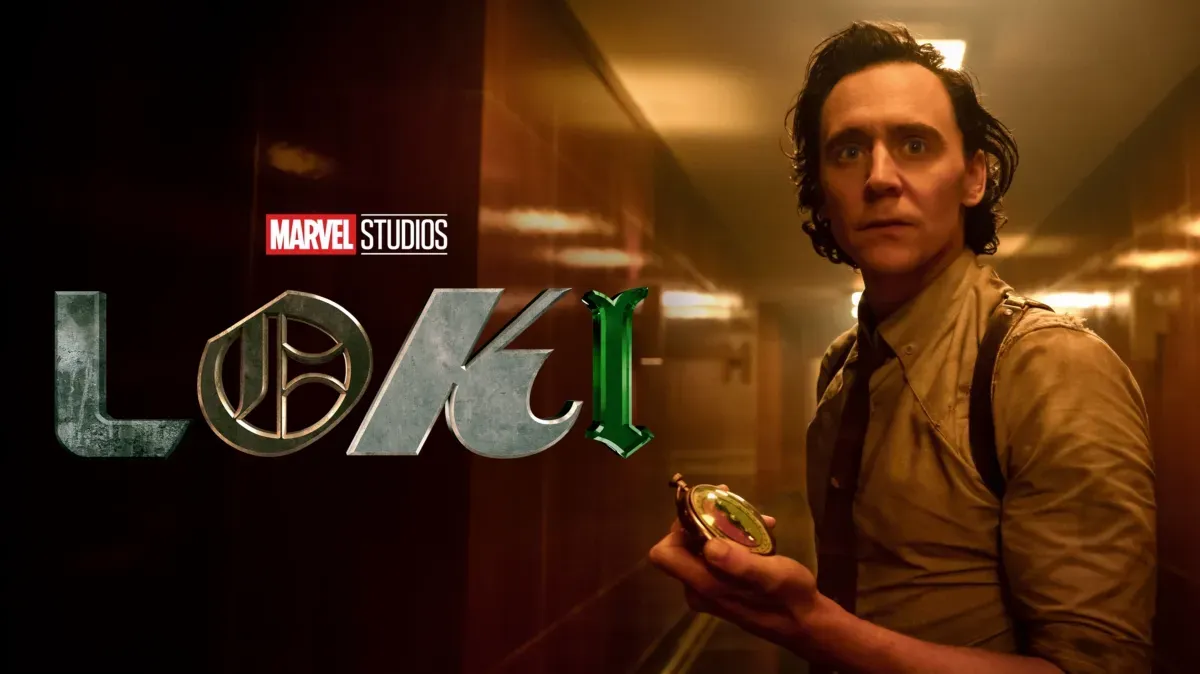
Loki as a Type and Shadow of Christ
“Christ figures” in film, in stories generally, are not a novel concept. It’s a compelling story, one man giving his life that others might live, so it’s no surprise that writers gravitate towards it. In my view, there’s something in us that loves to tell this story and there’s something in us that loves to hear this story.
If this is a new idea to you, consider the character of Neo in The Matrix (1999): one man, the supposed subject of prophecy, who, in death, becomes one who can bring humanity into the “real world”. Consider ET, in ET The Extra Terrestrial (1982), or The Iron Giant (1999): aliens who come to Earth, inspire compassion, make friends, and die for those friends only to be resurrected (ET is even a bit more on the nose as he ascends into the sky after communicating to Elliott that he will be with him “to the end of the age”1).
Perhaps demanding its own post is the example of Optimus Prime (né “Orion Pax”) in Transformers One (2024), who dies, standing in front of his enemy, descends and, having brought himself low, is elevated to a place of leadership, given his new name, and then casts out those who were “given the power to change our world [but] chose to destroy it.” If that wasn’t enough, the movie ends with Pax, now Prime, giving the citizens of Cybertron “new hearts”2 (cogs) that they might also be empowered to create a better world.
Types and Shadows
A “type and shadow” of Christ is a way of describing a person, an institution, perhaps an event, in the Old Testament that foreshadows or prefigures Jesus Christ. A “type” is a real person, institution, event, object etc. that corresponds to and points forward to Christ; a “shadow” emphasizes that the Old Testament thing is not the ultimate reality but rather a preliminary outline of something that will be fully revealed. The writer of Hebrews describes the Law as “a shadow of the good things to come”3 and Paul to the Colossians writes “the substance belongs to Christ.”4
If this is a new concept, consider Adam, a “type of one who was to come”5, the first man who was tested in the Garden, whose desire for autonomy brought separation from God; he pointed forward to a Man who, in a garden, would submit “not My will, but Yours, be done”6, whose obedience would bring resurrection.
In Exodus, Israel is spared from judgment because each household sacrifices a lamb and puts its blood on the doorposts. The lamb therefore becomes associated with substitution, deliverance, and protection from judgment. Christ is the fulfillment of that pattern.7
Perhaps the least straightforward (though ironically, a type that Jesus Himself points to) is the bronze serpent. “And as Moses lifted up the serpent in the wilderness, so must the Son of Man be lifted up”8. The thing representing the curse becomes the instrument through which God gives life. Likewise, Christ takes upon Himself the curse of sin on the cross, yet His crucifixion becomes the means of salvation.
(There’s an incredible YouTube video that hits a lot of these in succession very eloquently.)
I could, and routinely do, cry at the richness of the Gospel bursting through stories, in the Old Testament or otherwise. I do not expect my dive into Loki’s story to produce in you, reader, a comparable response. I only hope that I can aim you a bit closer to the solid form that is the source of this shadow that is so captivating.
Loki’s Candidacy
Loki, Son of Odin, God of Mischief, Prince of Asgard, is in some ways a less obvious and in other ways the most beautiful example of a Christ figure, specifically as his story is played out in the episodic series in which he is the titular character. One thing the character will require of you is to slow down. Finding holes in a metaphor is not an accomplishment and certainly does not warrant moving on (post on the value of metaphor forthcoming). “But Loki has a brother in Thor.”, or “But Loki develops a love interest!” or to reach at even lower hanging fruit “But Loki killed people!!” (honestly? fair.) All fine, granted, fantastic. Please slow down. The writers have done something that should be heralded in this show in writing a complex and uniquely human character, and Tom Hiddleston has given this humanity a face like very few could. Let’s sit in the actual dynamics, relationships, decisions, and emotions of what happens in this story. These things are signposts that point us to things that are “fully real”9 and so much more satisfying.
Note: as I work through these episodes, I will aim to quote the script and the specific language verbatim. I consider the writing to have been very purposeful and want to honor it.
Episode 1: Glorious Purpose
The primary anchor points of Loki’s story are touched multiple times in the first episode:
- Loki is burdened with glorious purpose.
- Loki is destined to lose.
Burdened with Glorious Purpose
“I am Loki, of Asgard, and I am burdened with glorious purpose” is not a new Loki moniker. It is the common thread across his interactions before this show and into it. What is done so well here in episode one is how this phrase is challenged. Mobius, from a position of power, is able to actually press for a definition. Loki says he wants to “rule Midgard” (Earth), then when pressed further, “the Nine Realms” (presumably most everything else), then Mobius presses even further:
Space? Space is big. That’d be a nice little feather in your cap. ‘Loki, the King of Space’.
The point of this dialogue is two-fold: first, Loki doesn’t actually know what that “glorious purpose” is, and second, the grandest vision he had for it is laughably small.
Further, there is this very purposeful word “burdened”. This word changes the connotation of the phrase dramatically. Loki is not simply destined for glorious purpose, but he is burdened with it. It is heavy. It is a weight. Something that is arduous, even painful, but necessary, required.
This episode also reminds us of Loki’s take on freedom. Previously he was on record, waxing poetic, “Is not this simpler? Is this not your natural state? It’s the unspoken truth of humanity, that you crave subjugation. The bright lure of freedom diminishes your life’s joy in a mad scramble for power, for identity. You were made to be ruled. In the end, you will always kneel.”10 And in this episode he describes himself as “a liberator”, referring to this idea of “liberation from freedom” again. Where necessity and requirement explain “burden,” and the ideas of ruling and kingship explain “glory,” I believe Loki’s understanding of himself as a liberator points to his “purpose.”
Destined to Lose
The concept of losing is also absolutely integral to Loki’s character, as the show makes clear. You could have perhaps come up with this on your own as you watched him end up on the losing side in two of three Thor movies, The Avengers, and Infinity War, but episode one plays all that back for you to make it ultra clear. However, I must submit that “losing” is not a straightforward idea, and certainly not in Loki’s story. For example, there is a mile in between “losing” and “sacrificing”. I may lose my queen to put you in checkmate. I may lose a game with my son to spend more time with him. I may lose my life that my friend might live11.
Mobius captures this in what I consider to be the most important line of the episode:
You weren’t born to be king, Loki. You were born to cause pain and suffering and death. That’s how it is, that’s how it was, that’s how it will be. All so that others can achieve the best versions of themselves.
To this point in the story, Loki has caused pain and suffering and death to others. Many of us hear this, agree with Mobius’ claim on its face, and move on. Loki says of being king, “I don’t want to be, I was born to be,” and Mobius tells him no he was born for pain and suffering and death. Neither destiny is satisfactory on its own. Rather, as is the case with much of the Gospel story, both of these are true. Yes, Loki is born to suffer, to be “a man of sorrows, acquainted with grief”12, and yes, Loki is born to rule; these are not opposed, they are both colors of the same much richer painting that is put to the canvas. And Mobius’ second line here should not be thrown away, “All so that others can achieve the best versions of themselves.” Christ bled and died that we might be presented to the Father like Christ, pure and blameless, the best versions of ourselves.
Concessions
I have no intention of putting a bow on this in a single post. Conversely, I have no intention of breaking down every episode. That is to say, there is more to come. The humanity of this character is both hard to miss and hard to capture, so I will continue. At best, you are affected to the point of slowing down and looking closer. At worst, I’ve spent meaningful time reflecting on the person of Jesus. May I say that of more and more of my time!
Footnotes
-
Matthew 28:20 ↩
-
Ezekiel 11:19 ↩
-
Hebrews 10:1 ↩
-
Colossians 2:17 ↩
-
Romans 5:14 ↩
-
Luke 22:42 ↩
-
1 Corinthians 5:7 ↩
-
John 3:14 ↩
-
“Hell is a state of mind — ye never said a truer word. And every state of mind, left to itself, every shutting up of the creature within the dungeon of its own mind — is, in the end, Hell. But Heaven is not a state of mind. Heaven is reality itself. All that is fully real is Heavenly. For all that can be shaken will be shaken and only the unshakeable remains.” C.S. Lewis, The Great Divorce (1945) ↩
-
The Avengers (2012) ↩
-
John 15:13 ↩
-
Isaiah 53:3 ↩